

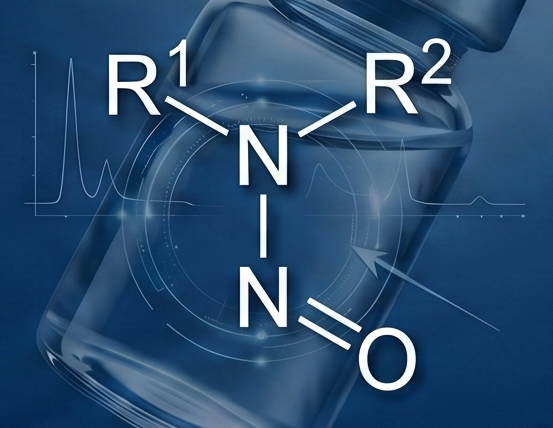
Nitrosamine risk assessment on 1 API
Nitrosamine Risk Assessment on 1 API
Comprehensive scope: A detailed risk assessment report for one drug substance (API). The report can be tailored to one specific territory upon request (e.g. built for compliance with specific regional guidelines). It is possible to integrate the assessment into company-specific templates or for inclusion in the regulatory file.
Early development: The service can also be offered early in development based on pilot scale processes, so that launch timings are not impacted by preparing for nitrosamine compliance.
Multi-factorial analysis: Includes a thorough assessment of API synthesis and purification manufacturing processes, primary packaging, and stability data. The approach is aligned with the expectations of regulators.
Expert insight: The process involves an expert chemistry assessment complemented by an extensive literature review to ensure all potential pathways are considered. The assessment is performed with scientific rigor.
Risk conclusion: Provides a clear conclusion on risk based on available information and includes strategic suggestions for NDSRI selection. The report includes recommendations for next steps if a risk is identified.
Semi-quantitative approach: Where provided inputs allow, the report includes a semi-quantitative risk assessment, including a preliminary assessment against the most conservative limit possible (e.g. CPCA-based RAIL). Where relevant, suggestions for theoretical purging studies or experimental spike and purge experiments are included.
Experimental boundaries: The service fee excludes experimental work and does not standardly include the design or execution of lab experiments (e.g., NAP tests, synthesizability, or stability testing in liquid/solid phases for NDSRIs, or spike-and-purge lab experiments mimicking API processes). However, if such data is provided by the customer or found in literature, it will be integrated into the final assessment. It is taken into account that identifying and selecting the correct Nitrosamine Drug Substance Related Impurity (NDSRI) if applicable is a key hurdle; the assessment process can be paused if experimentation to reach said identification is needed.
Gap analysis: If the provided data is insufficient, a clear gap analysis will be provided as part of the report.
Required documentation for a maximum assessment:
For a maximum assessment, the Client needs to provide:
Maximum daily dose of the API
(Planned) market(s) or market(s) in scope of the assessment
Manufacturer provided risk assessment on API
Primary packaging information on the API, including manufacturer provided risk assessment
Information on water usage
Specifications of the API (release and over shelf life); known impurities in the API and known degradation routes, API stability data (e.g. with a focus on API dealkylation chemistry).
If possible API synthesis and purification process and information on solvent recovery or other recovery processes. Information on bulk holding approaches for API and Intermediates.
Optional, if available: Formation/stability information linked to potential NDSRIs, NAP test, any preliminary experimentation to support the risk assessment, nitrites testing (Intermediates, API, reagents), information on NOx measurements in manufacturing plants, and stress testing studies on API.
All other information deemed relevant by the Client.
If applicable: historical risk assessments on the API (potentially including testing), and questions from authorities linked to the nitrosamine risk for the specific API.
ere is the revised text for the Nitrosamine Risk Assessment on 1 API, with all refinements and corrections clearly highlighted in red.
Nitrosamine Risk Assessment on 1 API
Comprehensive scope: A detailed risk assessment report for one drug substance (API). The report can be tailored to one specific territory upon request (e.g. built for compliance with specific regional guidelines). It is possible to integrate the assessment into company-specific templates or for inclusion in the regulatory file.
Early development: The service can also be offered early in development based on pilot-scale processes, so that launch timings are not impacted by preparing for nitrosamine compliance.
Multi-factorial analysis: Includes a thorough assessment of API synthesis and purification manufacturing processes, primary packaging, and stability data. The approach is aligned with the expectations of regulators.
Expert insight: The process involves an expert chemistry assessment complemented by an extensive literature review to ensure all potential pathways are considered. The assessment is performed with scientific rigor.
Risk conclusion: Provides a clear conclusion on risk based on available information and includes strategic suggestions for NDSRI selection. The report includes recommendations for next steps if a risk is identified.
Semi-quantitative approach: Where provided inputs allow, the report includes a semi-quantitative risk assessment, including a preliminary assessment against the most conservative limit possible (e.g. CPCA-based RAIL). Where relevant, suggestions for theoretical purging studies or experimental spike-and-purge experiments are included.
Experimental boundaries: The service fee excludes experimental work and does not standardly include the design or execution of lab experiments (e.g., NAP tests, synthesizability, or stability testing in liquid/solid phases for NDSRIs, or spike-and-purge lab experiments mimicking API processes). However, if such data is provided by the customer or found in literature, it will be integrated into the final assessment. It is taken into account that identifying and selecting the correct Nitrosamine Drug Substance Related Impurity (NDSRI); if applicable; is a key hurdle; the assessment process can be paused if experimentation to reach said identification is needed.
Gap analysis: If the provided data is insufficient, a clear gap analysis will be provided as part of the report.
Required documentation for a maximum assessment: For a maximum assessment, the client needs to provide:
Maximum daily dose of the API.
(Planned) market(s) or market(s) in scope of the assessment.
Manufacturer-provided risk assessment on API.
Primary packaging information (API), including manufacturer-provided risk assessment.
Information on water usage.
Specifications of the API (release and over shelf life); known impurities in the API and known degradation routes;API stability data (e.g. with a focus on API dealkylation chemistry).
If possible the API synthesis and purification process and information on solvent recovery or other recovery processes. Information on bulk holding approaches for the API and intermediates.
Optional, if available: Formation/stability information linked to potential NDSRIs, NAP tests, any preliminary experimentation to support the risk assessment, nitrite testing (intermediates, API, reagents), information on NOx measurements in manufacturing plants, and stress testing studies on API.
All other information deemed relevant by the client.
If applicable: Historical risk assessments on the API (potentially including testing), and questions from authorities linked to the nitrosamine risk for the specific API.
Logistics & Options
Lead time: 14 days (following receipt of all Client inputs).
Urgency option: Fast-Track option of 7 days (following receipt of all customer inputs) for an additional fee of € 950.00, subject to confirmation of consultant availability.
On request: Broadening scope to other nitroso compounds for an additional fee.
On request: Site visit to evaluate and discuss risk for an additional fee.
On request: Collecting the necessary inputs with suppliers for an additional fee.
Fee-for-service price can also be used for the assessment of herbal drug substances (inputs provided by the Client to be tailored to herbal drug substance).
Booking & Payment Terms
1-year validity: The Client must enable the execution of the service within one year of the date of purchase. After the 1-year validity, an extension might be applied for up to 2 additional years, provided that a price indexation adjustment is mutually agreed upon by both parties.
The pricing is based on immediate checkout via the website (full or partial prepayment). Alternatively, corporate orders can be placed via email by submitting an official Purchase Order (PO) to hello@clarbonyx.com.
Our standard Terms apply to all orders unless an alternative agreement is explicitly in place. To establish a specific framework agreement with Clarbonyx, we recommend completing our "Become a Client" form.
Nitrosamine Risk Assessment on 1 API
Comprehensive scope: A detailed risk assessment report for one drug substance (API). The report can be tailored to one specific territory upon request (e.g. built for compliance with specific regional guidelines). It is possible to integrate the assessment into company-specific templates or for inclusion in the regulatory file.
Early development: The service can also be offered early in development based on pilot scale processes, so that launch timings are not impacted by preparing for nitrosamine compliance.
Multi-factorial analysis: Includes a thorough assessment of API synthesis and purification manufacturing processes, primary packaging, and stability data. The approach is aligned with the expectations of regulators.
Expert insight: The process involves an expert chemistry assessment complemented by an extensive literature review to ensure all potential pathways are considered. The assessment is performed with scientific rigor.
Risk conclusion: Provides a clear conclusion on risk based on available information and includes strategic suggestions for NDSRI selection. The report includes recommendations for next steps if a risk is identified.
Semi-quantitative approach: Where provided inputs allow, the report includes a semi-quantitative risk assessment, including a preliminary assessment against the most conservative limit possible (e.g. CPCA-based RAIL). Where relevant, suggestions for theoretical purging studies or experimental spike and purge experiments are included.
Experimental boundaries: The service fee excludes experimental work and does not standardly include the design or execution of lab experiments (e.g., NAP tests, synthesizability, or stability testing in liquid/solid phases for NDSRIs, or spike-and-purge lab experiments mimicking API processes). However, if such data is provided by the customer or found in literature, it will be integrated into the final assessment. It is taken into account that identifying and selecting the correct Nitrosamine Drug Substance Related Impurity (NDSRI) if applicable is a key hurdle; the assessment process can be paused if experimentation to reach said identification is needed.
Gap analysis: If the provided data is insufficient, a clear gap analysis will be provided as part of the report.
Required documentation for a maximum assessment:
For a maximum assessment, the Client needs to provide:
Maximum daily dose of the API
(Planned) market(s) or market(s) in scope of the assessment
Manufacturer provided risk assessment on API
Primary packaging information on the API, including manufacturer provided risk assessment
Information on water usage
Specifications of the API (release and over shelf life); known impurities in the API and known degradation routes, API stability data (e.g. with a focus on API dealkylation chemistry).
If possible API synthesis and purification process and information on solvent recovery or other recovery processes. Information on bulk holding approaches for API and Intermediates.
Optional, if available: Formation/stability information linked to potential NDSRIs, NAP test, any preliminary experimentation to support the risk assessment, nitrites testing (Intermediates, API, reagents), information on NOx measurements in manufacturing plants, and stress testing studies on API.
All other information deemed relevant by the Client.
If applicable: historical risk assessments on the API (potentially including testing), and questions from authorities linked to the nitrosamine risk for the specific API.
ere is the revised text for the Nitrosamine Risk Assessment on 1 API, with all refinements and corrections clearly highlighted in red.
Nitrosamine Risk Assessment on 1 API
Comprehensive scope: A detailed risk assessment report for one drug substance (API). The report can be tailored to one specific territory upon request (e.g. built for compliance with specific regional guidelines). It is possible to integrate the assessment into company-specific templates or for inclusion in the regulatory file.
Early development: The service can also be offered early in development based on pilot-scale processes, so that launch timings are not impacted by preparing for nitrosamine compliance.
Multi-factorial analysis: Includes a thorough assessment of API synthesis and purification manufacturing processes, primary packaging, and stability data. The approach is aligned with the expectations of regulators.
Expert insight: The process involves an expert chemistry assessment complemented by an extensive literature review to ensure all potential pathways are considered. The assessment is performed with scientific rigor.
Risk conclusion: Provides a clear conclusion on risk based on available information and includes strategic suggestions for NDSRI selection. The report includes recommendations for next steps if a risk is identified.
Semi-quantitative approach: Where provided inputs allow, the report includes a semi-quantitative risk assessment, including a preliminary assessment against the most conservative limit possible (e.g. CPCA-based RAIL). Where relevant, suggestions for theoretical purging studies or experimental spike-and-purge experiments are included.
Experimental boundaries: The service fee excludes experimental work and does not standardly include the design or execution of lab experiments (e.g., NAP tests, synthesizability, or stability testing in liquid/solid phases for NDSRIs, or spike-and-purge lab experiments mimicking API processes). However, if such data is provided by the customer or found in literature, it will be integrated into the final assessment. It is taken into account that identifying and selecting the correct Nitrosamine Drug Substance Related Impurity (NDSRI); if applicable; is a key hurdle; the assessment process can be paused if experimentation to reach said identification is needed.
Gap analysis: If the provided data is insufficient, a clear gap analysis will be provided as part of the report.
Required documentation for a maximum assessment: For a maximum assessment, the client needs to provide:
Maximum daily dose of the API.
(Planned) market(s) or market(s) in scope of the assessment.
Manufacturer-provided risk assessment on API.
Primary packaging information (API), including manufacturer-provided risk assessment.
Information on water usage.
Specifications of the API (release and over shelf life); known impurities in the API and known degradation routes;API stability data (e.g. with a focus on API dealkylation chemistry).
If possible the API synthesis and purification process and information on solvent recovery or other recovery processes. Information on bulk holding approaches for the API and intermediates.
Optional, if available: Formation/stability information linked to potential NDSRIs, NAP tests, any preliminary experimentation to support the risk assessment, nitrite testing (intermediates, API, reagents), information on NOx measurements in manufacturing plants, and stress testing studies on API.
All other information deemed relevant by the client.
If applicable: Historical risk assessments on the API (potentially including testing), and questions from authorities linked to the nitrosamine risk for the specific API.
Logistics & Options
Lead time: 14 days (following receipt of all Client inputs).
Urgency option: Fast-Track option of 7 days (following receipt of all customer inputs) for an additional fee of € 950.00, subject to confirmation of consultant availability.
On request: Broadening scope to other nitroso compounds for an additional fee.
On request: Site visit to evaluate and discuss risk for an additional fee.
On request: Collecting the necessary inputs with suppliers for an additional fee.
Fee-for-service price can also be used for the assessment of herbal drug substances (inputs provided by the Client to be tailored to herbal drug substance).
Booking & Payment Terms
1-year validity: The Client must enable the execution of the service within one year of the date of purchase. After the 1-year validity, an extension might be applied for up to 2 additional years, provided that a price indexation adjustment is mutually agreed upon by both parties.
The pricing is based on immediate checkout via the website (full or partial prepayment). Alternatively, corporate orders can be placed via email by submitting an official Purchase Order (PO) to hello@clarbonyx.com.
Our standard Terms apply to all orders unless an alternative agreement is explicitly in place. To establish a specific framework agreement with Clarbonyx, we recommend completing our "Become a Client" form.